
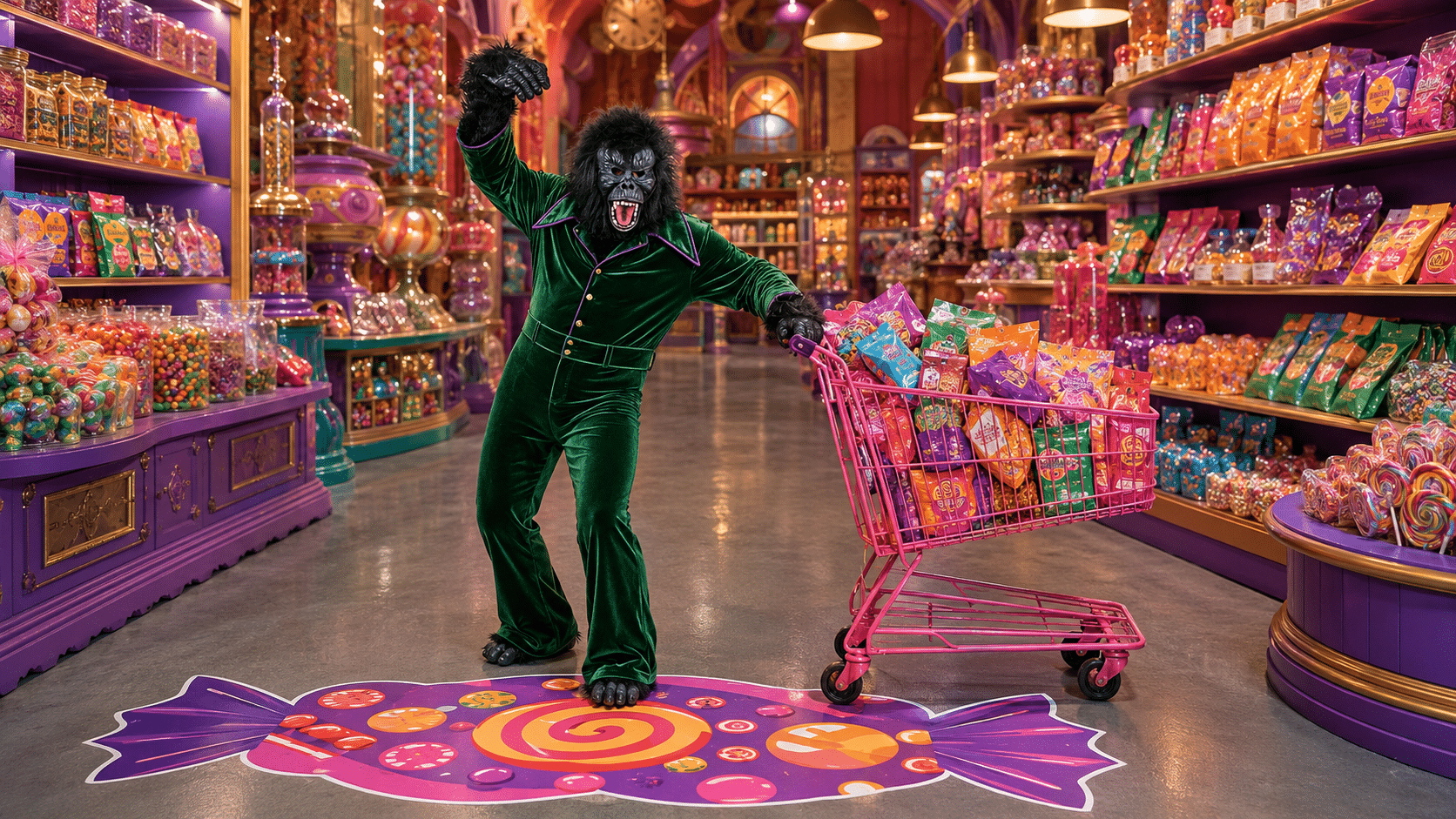
Most retail campaign plans are surprisingly vertical. Windows, walls, shelves, cooler doors, end caps. Then everyone stands around discussing what shoppers see at eye level. Meanwhile, one of the largest surfaces in the store is carrying every shopper through the campaign.
Does that make the floor brilliant media space? Potentially. It is also scuffed, crowded, viewed from strange angles and regularly attacked by trolley wheels.
Which is exactly why it deserves a strategy — not leftover artwork.
👉 Explore floor graphics for retail campaigns
Do shoppers really look down?
Yes. But perhaps not for the reason marketers would like to believe.
People don’t walk through stores admiring the floor like an art exhibition. Their attention follows the task: navigating an aisle, finding a category or approaching a display. Research into gaze while walking shows that people look for information that helps them move and reduces uncertainty.
That gives floor graphics an interesting role — not as posters placed horizontally, but as visual cues inserted into a journey already taking place.
The question isn’t simply, “Will shoppers see the floor?” It is: At which moment could the floor help them?
What is the floor actually good at?
In our view, floor graphics have three particularly useful jobs.
- They can guide shoppers towards a promotion.
- They can frame a display and turn the surrounding area into a campaign zone.
- Or they can deliver one final prompt just before the shopper reaches the product.
What they rarely do well is explain something complicated.
If the message was too long for the shelf, moving it to the floor won’t save it. It will just make the copy harder to read. The floor works best when the message and the desired action are almost impossible to separate: follow this, look here, try this.
No room on the shelf? Look down.
Sometimes the strongest argument for using the floor is brutally practical: there is nowhere else to go.
Take a fully stocked confectionery aisle. Every centimetre of shelf is already working — holding products, prices, category information and promotional material. Add another wobbler and it may cover the very packaging it is supposed to sell. Or simply disappear into the sugar-coated chaos.
A floor graphic gives the campaign breathing room next to the shelf. It can isolate one brand, extend a campaign colour into the aisle or make a product launch visible before the shopper starts scanning dozens of packs.
Good POS should help people shop — not get between them and the product.
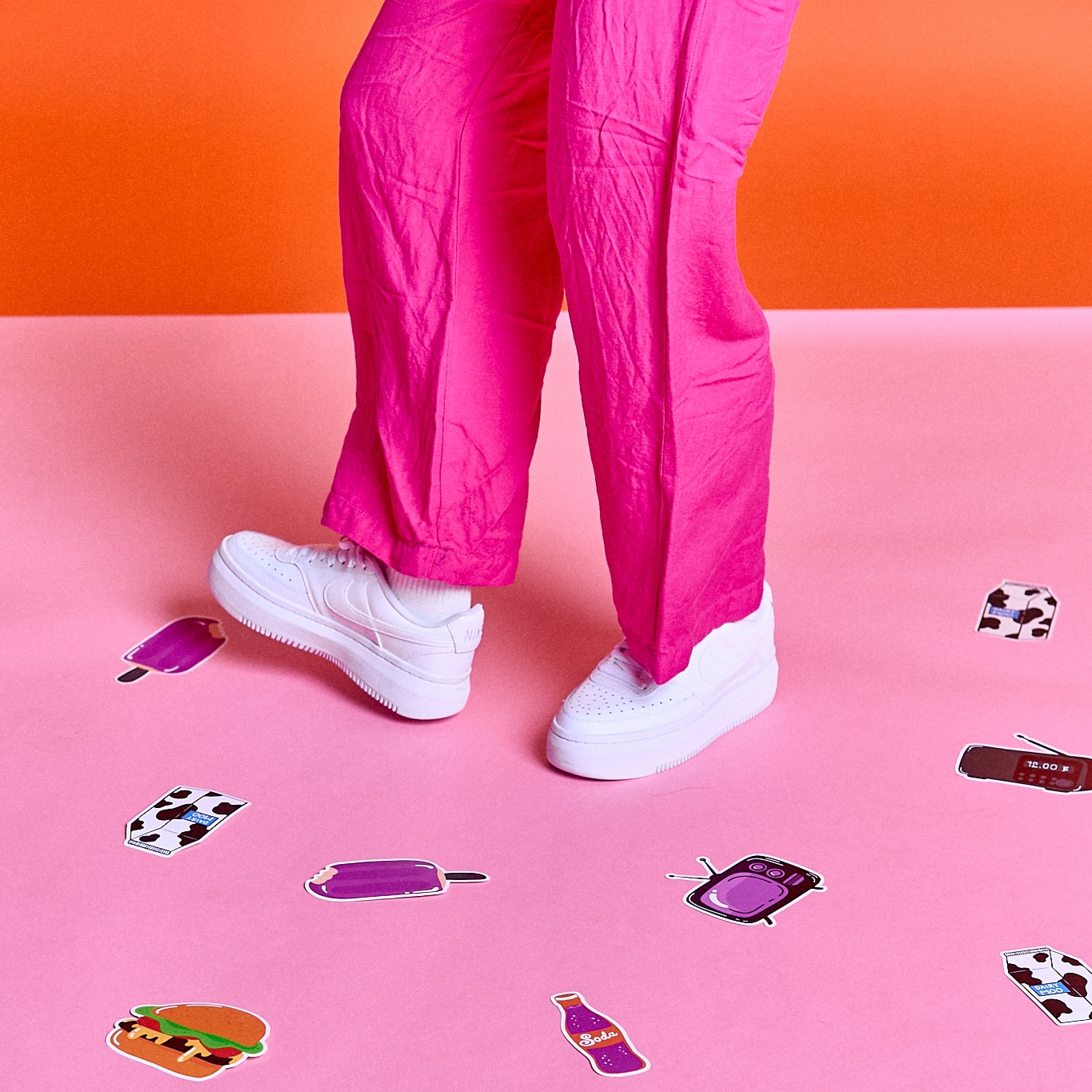
About those impressive sales-lift figures…
You will find industry case studies connecting floor graphics with longer dwell times and higher sales. Some of the results sound excellent.
But there is no universal “floor graphic effect”.
A directional graphic, a branded campaign zone and a last-second promotional message are doing different jobs. Did more shoppers find the display? Did they spend longer around it? Did product sales change? And could store staff install the graphics without turning the campaign launch into a small renovation project?
“More visibility” sounds nice in a presentation. A change in behaviour tells us much more.
The floor is still a floor
This is the unglamorous bit — and the bit that separates a clever concept from a workable campaign.
The printed material, ink, laminate, floor surface, traffic and cleaning routine all behave as one system. A suitable protective laminate with the required anti-slip properties is essential, and the complete construction should be tested on the actual surface.
Edges, joints and damaged areas matter. So does monitoring the graphic during the campaign. Bold creative is welcome. Curling edges are not.
Where PULPO fits

STAFIX® PULPO is one material answer for temporary indoor floor graphics. Its micro-suction adhesion layer applies bubble-free to suitable smooth and semi-smooth surfaces and removes without sticky residue. For floor use, the printed graphic is combined with a suitable protective laminate offering anti-slip properties.
And yes, we still recommend testing the complete construction on the intended floor. Materials are clever. Floors remain wonderfully unpredictable.
👉 Explore floor graphics for retail campaigns
Shall we put the idea under real feet?
A specification sheet can narrow down the options. A printed, laminated sample on the actual floor tells you much more.
Have a campaign in mind? Show us the floor, tell us about the traffic and campaign duration, and let’s work out what should be tested.
The walls and shelves have had plenty of attention.
Maybe it’s finally the floor’s turn. 🦍