
PVC in packaging and labels does pose genuine health risks, primarily through the release of vinyl chloride monomer during manufacturing and incineration, and through phthalate plasticisers that can leach from the material over time. These risks are well-documented enough that regulatory bodies across Europe and North America have moved to restrict or phase out PVC in many consumer-facing applications. The questions below break down exactly how PVC affects health, why it remains controversial, and what safer alternatives now exist for brands and printers.
How does PVC in labels and packaging affect human health?
PVC in labels and packaging poses health risks primarily through two pathways: vinyl chloride exposure during production and incineration, and the leaching of chemical additives such as phthalates during everyday use. Vinyl chloride, the monomer used to make PVC, is classified as a known human carcinogen. Workers in PVC manufacturing facilities face the highest exposure risk, but the concern extends to consumers when PVC packaging is heated, damaged, or disposed of improperly.
In everyday use, rigid PVC packaging presents a lower acute risk than flexible PVC, which requires large quantities of plasticisers to remain pliable. However, even rigid PVC can degrade over time, particularly when exposed to heat or UV light, releasing small amounts of chlorinated compounds. For packaging that comes into contact with food, cosmetics, or children’s products, this is a meaningful concern that has driven significant regulatory attention over the past two decades.
The risk profile is not uniform across all uses. A PVC label on a shop window poses far less direct health risk than PVC film wrapping food. However, the end-of-life hazards, including toxic emissions during incineration, apply regardless of the application.
What are phthalates and why are they added to PVC?
Phthalates are a family of chemical plasticisers added to PVC to make it flexible and workable. Without them, PVC is brittle and difficult to process into films, labels, or flexible packaging. Phthalates can make up anywhere from 10% to 60% of the weight of flexible PVC products, and because they are not chemically bonded to the polymer, they can migrate out of the material over time through contact, heat, or abrasion.
The health concern with phthalates centres on their classification as endocrine disruptors. Research indicates that certain phthalates, particularly DEHP, DBP, and BBP, can interfere with hormonal systems in the body, with particular concern for reproductive development in children and foetuses. This is why phthalates have attracted some of the strictest regulatory attention of any plastic additive.
For label and signage materials, the presence of phthalates means that flexible PVC labels are not simply a disposal problem. They are an active chemical concern throughout their usable life, especially in environments where they are handled frequently or where they come into contact with skin.
Which regulatory bodies have restricted PVC in labels and packaging?
Several major regulatory bodies have introduced restrictions on PVC and its associated additives, particularly phthalates, in labels and packaging. The European Chemicals Agency (ECHA) has listed multiple phthalates as Substances of Very High Concern (SVHCs) under REACH regulations, restricting their use in many consumer products sold within the EU. The European Union’s RoHS directive also restricts certain phthalates in electrical and electronic equipment, including decorative labels on such products.
In the United States, the Consumer Product Safety Improvement Act (CPSIA) restricts specific phthalates in children’s products, and the Environmental Protection Agency (EPA) has flagged vinyl chloride as a priority hazardous substance. California’s Proposition 65 requires businesses to provide warnings when products expose consumers to listed chemicals, including vinyl chloride and several phthalates.
Beyond formal regulation, many major retailers and brand owners have introduced their own restricted substances lists (RSLs) that go further than current legislation. Retailers in the fashion, electronics, and food sectors increasingly require suppliers to demonstrate PVC-free supply chains, making compliance a commercial necessity even where regulation has not yet caught up.
What happens to PVC labels when they are incinerated or landfilled?
When PVC labels are incinerated, they release hydrogen chloride gas and, under incomplete combustion conditions, can produce dioxins and furans, which are among the most toxic persistent organic pollutants known. Even in modern waste-to-energy facilities with advanced filtration, PVC is considered a problematic input because of the additional burden it places on emission control systems. This is why many waste management operators actively seek to minimise PVC content in incineration streams.
In landfill, PVC degrades very slowly and can leach plasticisers and stabilisers into surrounding soil and groundwater over time. Cadmium- and lead-based stabilisers, which were historically common in PVC formulations, are particularly concerning in this context, though their use has been significantly reduced in Europe following industry agreements and regulation.
From a recycling perspective, PVC is also problematic. Unlike polyethylene or polypropylene, PVC contains chlorine and requires specialised handling. Even small quantities of PVC contamination in a recycling stream intended for other plastics can degrade the quality of the recovered material. This is why brands and printers are actively reducing their reliance on PVC-based materials, and it is the core reason why every Stafix product is designed to be PVC-free, built around materials that align with established recycling streams rather than disrupting them. You can learn more in our Stafix PVC-free recycling and materials guide.
What are the safest alternatives to PVC in labels and signage?
The safest alternatives to PVC in labels and signage are materials that achieve adhesion without chlorinated polymers, permanent adhesives, or phthalate plasticisers. These include polyolefin-based films, paper substrates, and innovative adhesive-free technologies that use static charge or micro-suction to bond to surfaces without leaving residue. The key criteria for a genuinely safer alternative are: no PVC, no phthalates, removability without surface damage, and compatibility with existing recycling streams.
We developed our product range specifically to meet these criteria. Stafix materials use two distinct adhesive-free technologies: STAFIX STATIC, which clings to clean, smooth surfaces through static charge with no adhesive at all, and STAFIX GRIP, which uses a silicone-based micro-adhesive that bonds firmly but removes cleanly. Both product families are PVC-free and phthalate-free, require no professional installation, and leave no marks when removed. They can also be reused for up to 12 months, which reduces material consumption over time.
For brands, agencies, and printers looking to move away from PVC labels, the practical checklist for evaluating alternatives should include:
- Confirmation that the substrate contains no PVC or chlorinated polymers
- No phthalate plasticisers or restricted substances under REACH or equivalent regulations
- Clean removability from surfaces including glass, polished metal, and painted walls
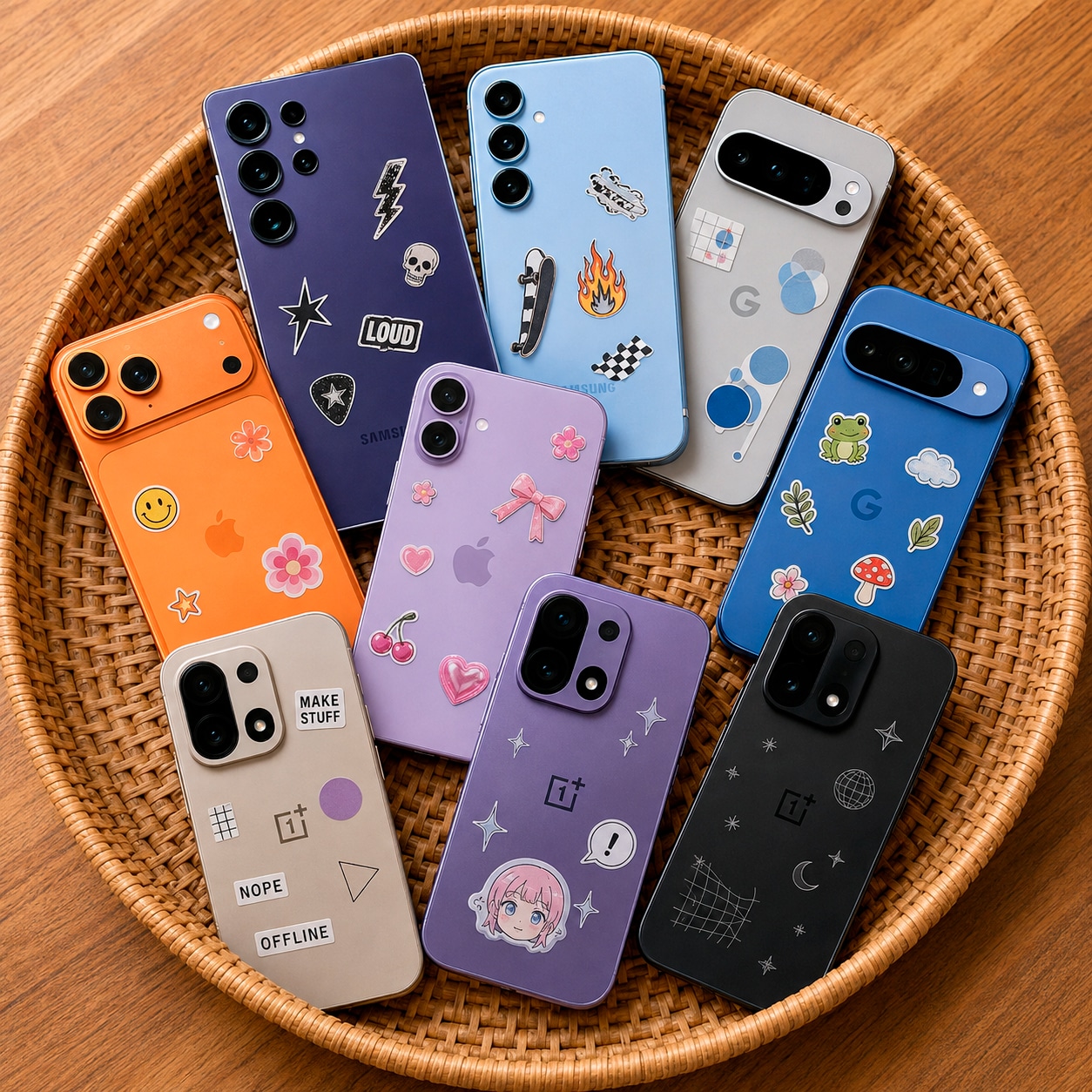
- Compatibility with offset, toner, or UV inkjet printing processes, including applications such as epic PVC-free laptop stickers
- End-of-life recyclability or, at minimum, no contamination of other recycling streams
As sustainability requirements tighten across retail, events, and point-of-sale marketing in 2026, the shift away from PVC in labels and signage is accelerating. Choosing PVC-free label materials is no longer just an ethical preference. For many brands and retailers, it is becoming a baseline supply chain requirement.